Lab-Grown vs Natural Diamonds in Toronto: A Jeweler's Honest 2026 Guide
Both are real diamonds. Here's how to choose, without the sales pitch.
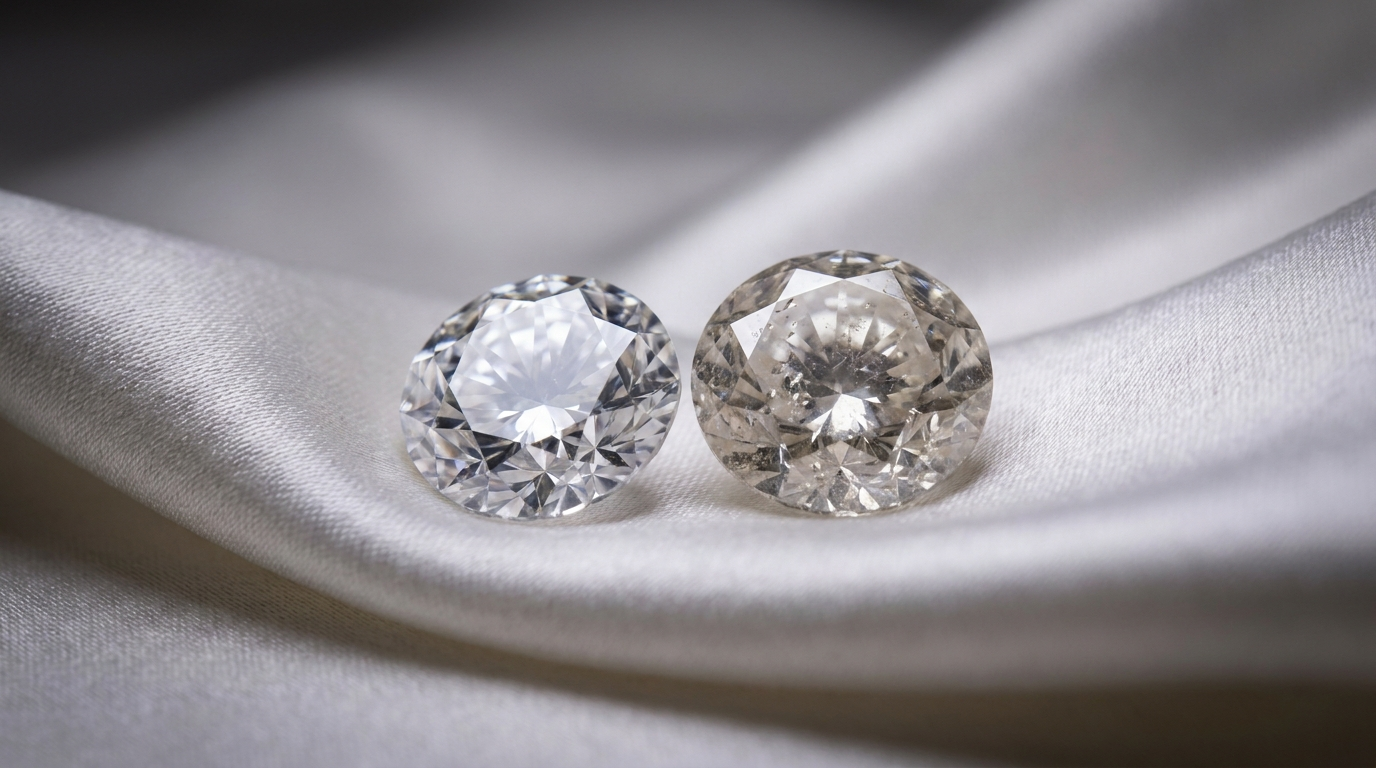
Lab-grown diamonds went from "what are those?" to 60% of our engagement ring orders in under five years. Every week a couple walks into our Toronto studio asking the same question: lab or natural?
There is no universally right answer. This guide gives you the real differences and helps you pick based on what actually matters to you, not what a jeweler is trying to sell.
The short version
- Same properties. Both are real diamonds: same carbon lattice, same hardness (Mohs 10), same brilliance, same fire.
- Price. Lab-grown costs significantly less at identical 4C specs, typically 40–60% less, with savings growing at higher carats.
- Resale. Natural holds value over decades. Lab-grown values have dropped substantially since 2020 and the secondary market is still developing.
- Ethics. Lab-grown has zero mining impact but uses energy. Certified natural (Kimberley Process + SCS) is conflict-free.
- Sentiment. Natural formed over billions of years underground. Lab-grown grew in a controlled environment in weeks.
What exactly is a lab-grown diamond?
Lab-grown diamonds are real diamonds produced in laboratory conditions that replicate the heat and pressure that form natural diamonds underground. Two methods are used today:
- HPHT (High Pressure High Temperature): mimics deep-earth conditions; used for smaller and coloured diamonds.
- CVD (Chemical Vapour Deposition): grows diamonds layer by layer from carbon-rich gas; the dominant method for colourless gem-quality stones.
Both produce 100% real diamonds. The GIA, IGI, and GCAL all certify lab-grown diamonds, with reports that look nearly identical to natural diamond reports.
Head-to-head comparison
| Attribute | Natural | Lab-Grown |
|---|---|---|
| Chemical composition | Carbon (C) | Carbon (C) |
| Hardness (Mohs) | 10 | 10 |
| Brilliance / fire | Identical | Identical |
| Certification | GIA (standard) | IGI, GCAL, GIA |
| Price vs natural | Reference | Typically 40–60% less |
| Price trend | Stable / gradually rising | Falling year over year |
| Resale value | Good over decades | Limited secondary market |
| Ethical sourcing | KP + SCS certified | No mining impact |
| Energy use | Mining energy | Electricity (CVD/HPHT) |
| Sentiment / story | Billions of years old | Grown in weeks |
| Size for budget | Smaller for $ | Significantly larger for $ |
The price difference, and why it matters
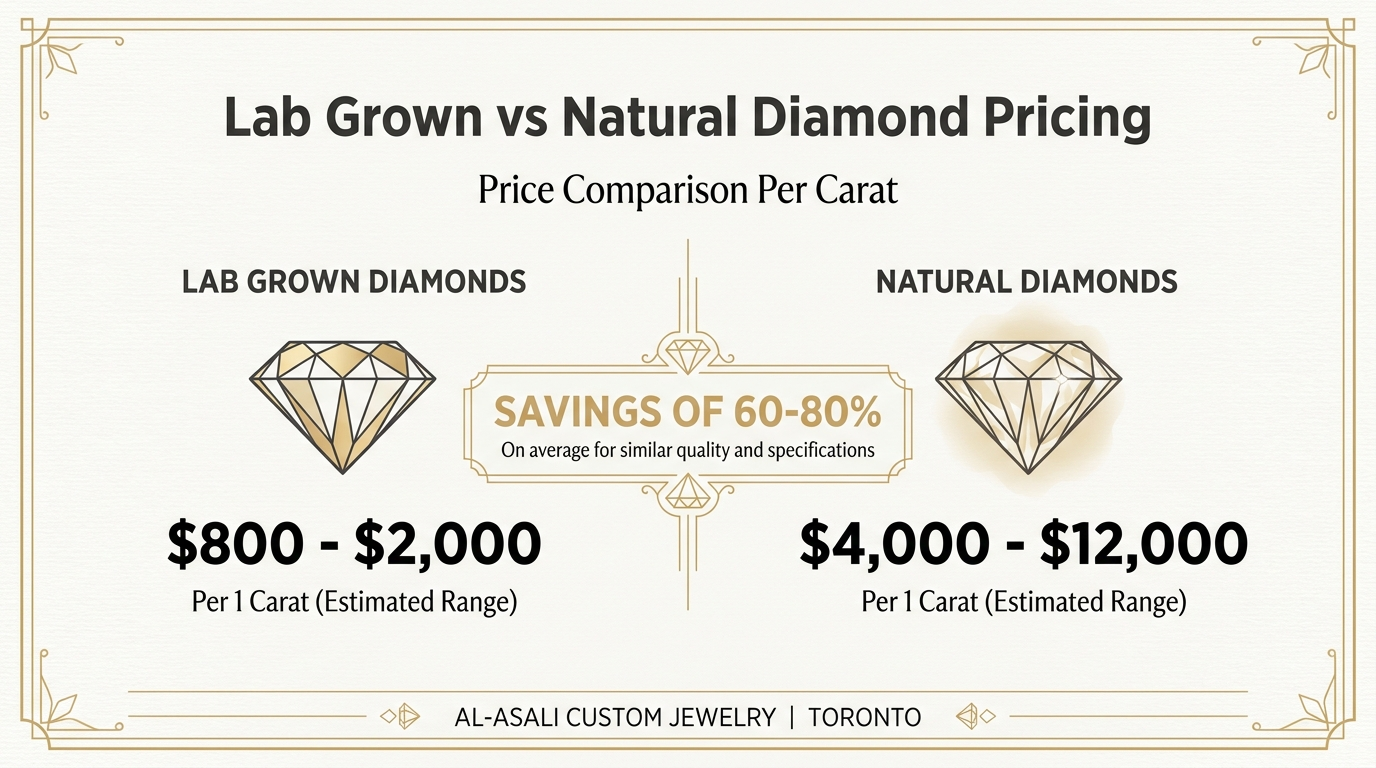
The price gap between lab-grown and natural is substantial, and it grows with carat size. At smaller carats the savings are meaningful; at 2ct and above, lab-grown can be a fraction of what you'd pay for natural at the same 4Cs.
This means a lab-grown diamond allows you to buy a significantly larger, higher-clarity stone for the same budget, or to allocate more toward the setting, metal, or other aspects of the piece.
When to choose lab-grown
Lab-grown makes sense when:
- You want the biggest visible stone for your budget
- You're comfortable with the diamond being "new" rather than ancient
- Zero-mining-impact matters more to you than long-term resale
- You want VVS clarity at a price point closer to VS natural
- You're buying a tennis bracelet, studs, or anniversary piece where resale isn't a priority
When to choose natural
Natural makes sense when:
- Long-term resale value matters, for heirloom engagement rings especially
- You care about the geological story, formed deep underground over billions of years
- You want the piece to hold its value through economic cycles
- You're resetting a family stone into a new piece
- Classic engagement-ring symbolism matters to you
The resale question, worth understanding
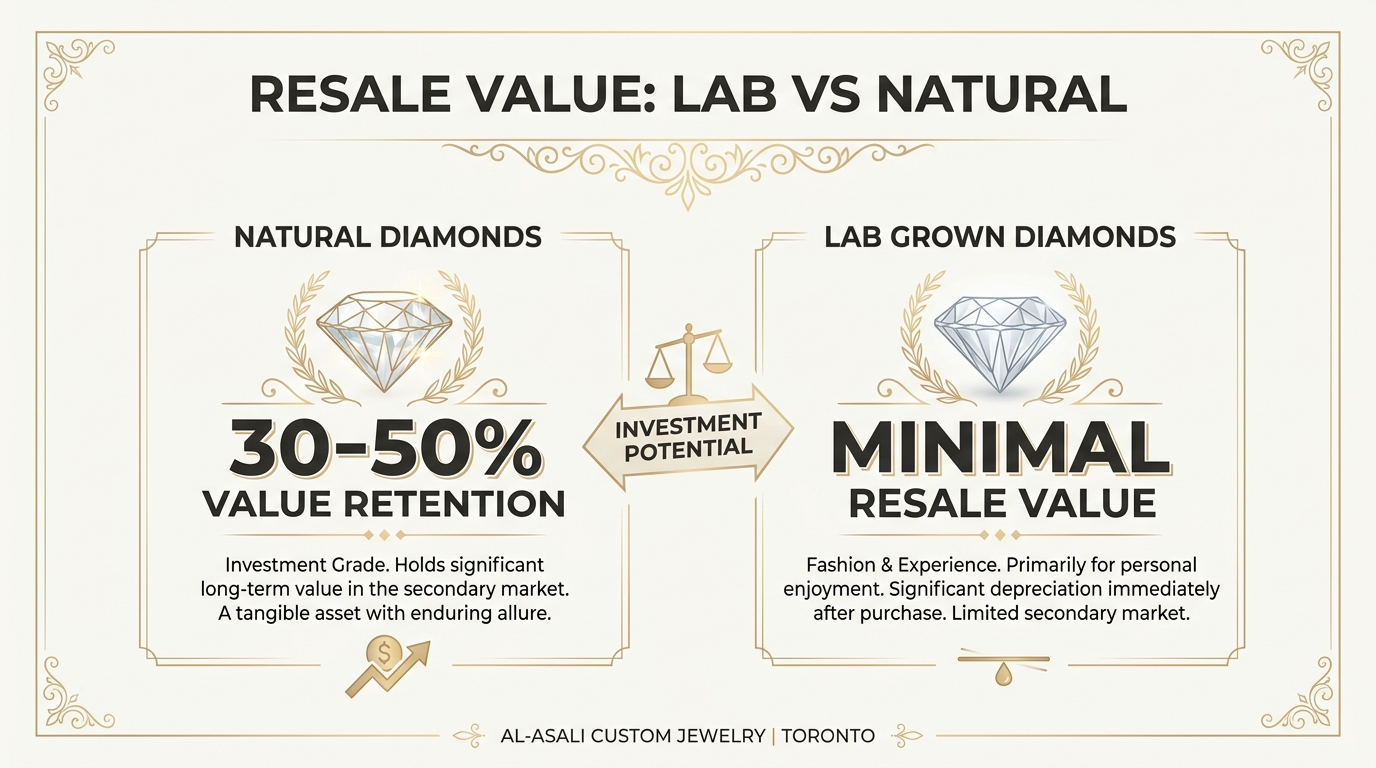
Lab-grown diamond prices have dropped dramatically since 2020. That's great if you're buying today, since you get more stone for your money than ever before. But it also means if you buy a lab-grown now and try to sell or upgrade it in several years, the resale market is limited and you'll take a significant hit.
Natural diamonds have a limited but real secondary market. They lose some value when sold retail-to-secondhand (as any luxury item does), but that depreciation has been relatively stable over decades and the GIA-grading system underpins a genuine buyer market. Lab-grown doesn't yet have a mature secondary market at all.
Put plainly: if you're buying an engagement ring you expect to pass to a child, natural is the safer choice for value preservation. If you're buying a tennis bracelet or studs you'll wear for a decade, lab-grown is almost always better value.
What we recommend at our Toronto studio
- Engagement rings: Natural if heirloom value matters most; lab-grown if bigger-for-budget is the priority.
- Tennis bracelets, studs, anniversary bands: Lab-grown almost always, for significantly more stone at the same spend.
- Grillz: Either works. Most clients pick lab-grown for value; some choose natural for status.
- Pendants, earrings, right-hand rings: Lab-grown usually wins, since these aren't typically resold.
How we source at Al-Asali Jewelry
We stock both lab-grown and natural diamonds at our Toronto studio. Every natural diamond over 0.5ct ships with a GIA grading report. Every lab-grown over 0.5ct ships with an IGI or GCAL report. During your consultation we compare loose stones of both categories, on camera in high resolution, or in person by appointment. Most couples change their mind at least once after seeing them side by side.
Book a consultation
No pressure, no sales script. Book a free virtual consultation, or come meet us in Toronto by appointment. We'll walk through the trade-offs that matter to you, pull loose stones in both categories, and help you choose with eyes open.